Financial Inclusion


Whether it is digital payments, resilience for MSMEs or financial integrity, much of our work is underpinned by the desire to create more inclusive financial systems and services. Cenfri has successfully implemented several multi-year financial inclusion programmes:

Our view is that while financial inclusion targets (such as the percentage of adults with a bank account) are valid, they don’t tell you much when tracked in isolation. It is important to understand whether people use their financial services, and if so, whether this enables them to meet their needs. We have developed six financial inclusion measurement frameworks that outline this expanded understanding of financial inclusion.

We are aware of the importance of women’s financial inclusion and apply a gender lens to much of our work. 

Digital Transformation & Data

Data can provide confidence to approach underserved markets

Ekow Duker, Managing Director of Ixio Analytics, shares his views on the way in which financial service providers approach and use data. Ekow was the moderator of the insight2impact roundtable discussion, which we hosted as part of the Chief Data & Analytics Officer Africa event in July 2017. During the insight2impact roundtable

Financial Inclusion

Labour unions and financial inclusion in South Africa

Labour unions play a critical role in improving the well-being of their members through promoting their rights in the workplace. As an organising entity with bargaining power, access to a typically low-income membership-base, footprint and in some instances, significant financial resources at their disposal, unions are well placed to facilitate

7 innovations in quantitative research
Financial Inclusion

7 innovations in quantitative research: Broadening the financial inclusion survey toolkit

In a previous blog on 10 innovations in qualitative research, I wrote about the importance of using a greater variety of research designs, methods and data collection techniques when conducting financial inclusion research. Similarly, this blog discusses some innovative quantitative methods that could be used when conducting financial inclusion research. It is

Digital Transformation & Data

7 innovations in quantitative research: Broadening the financial inclusion survey toolkit

In a previous blog on 10 innovations in qualitative research, I wrote about the importance of using a greater variety of research designs, methods and data collection techniques when conducting financial inclusion research. Similarly, this blog discusses some innovative quantitative methods that could be used when conducting financial inclusion research.

Digital Transformation & Data

10 innovations in qualitative research

Demand-side surveys (DSS) in financial inclusion are growing in popularity. These are surveys that focus on the consumers of financial services and, though this increase is encouraging, we find that existing DSS rely heavily on standard cross-sectional survey designs, and often ignore emerging qualitative survey techniques. Sticking to traditional methods is

DataHack4FI Final
Digital Transformation & Data

DataHack4FI Final – Data Science and Financial Inclusion

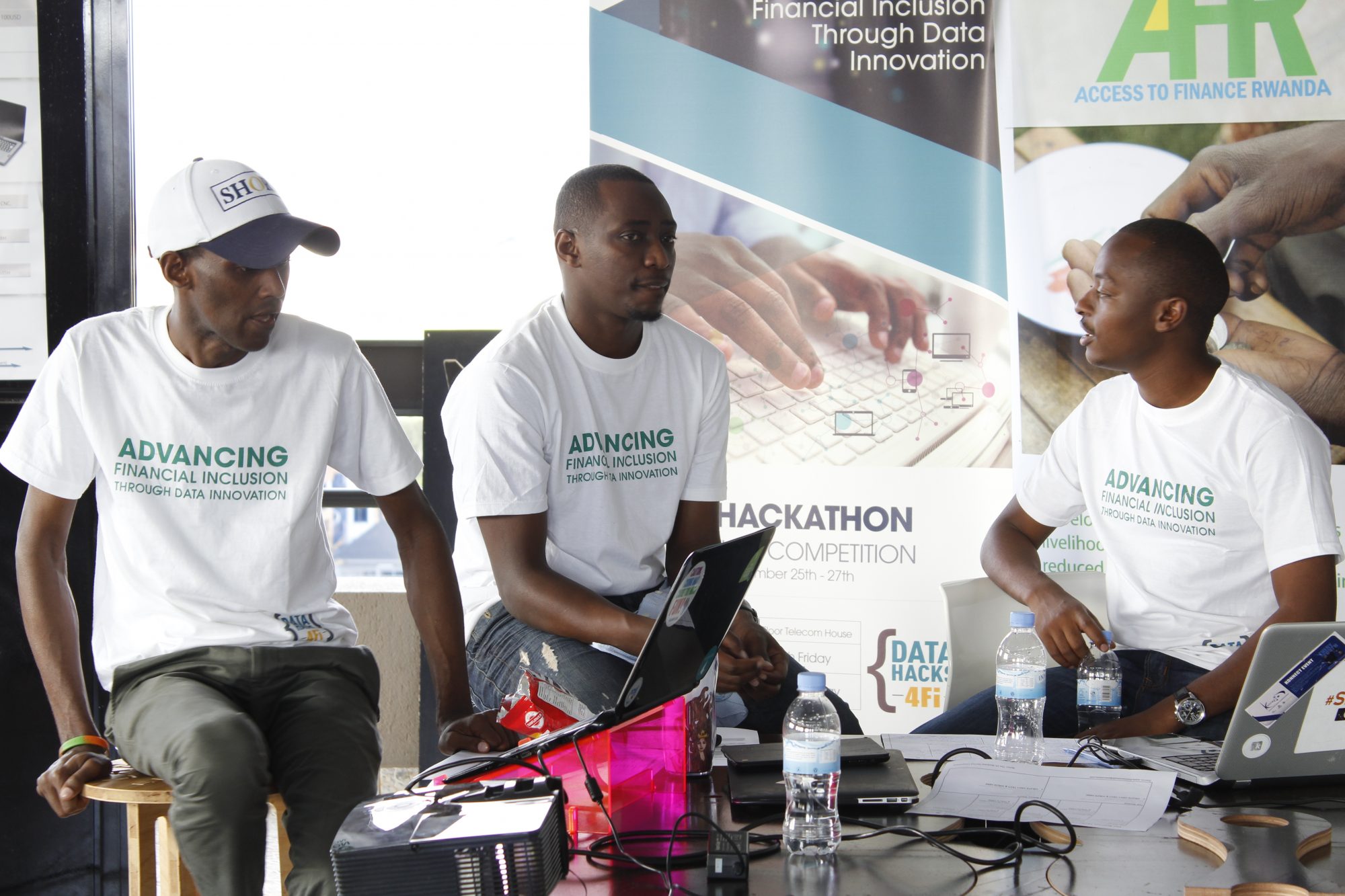
As a researcher, few experiences are more gratifying than seeing your research come to life. With this in mind, we started our seven-month #DataHack4FI competition, bringing together young data enthusiasts, innovation hubs, development partners, fintechs and financial service providers (FSPs) to mobilise the data market around financial inclusion. From the

Digital Transformation & Data

Transform Africa Summit

Highlights, Kigali, Rwanda, 10 -12 May 2017. insight2impact (i2ifacility) was funded by Bill and Melinda Gates Foundation in partnership with Mastercard Foundation. The programme was established and driven by Cenfri and Finmark Trust.