Payments & Remittances


Cenfri has broad experience in fit-for-purpose payment systems in emerging markets, particularly in Africa. We work towards making retail payments a public good, assisting central banks, payments operators and payment system participants navigate domestic and cross-border payments modernisation in a manner that contributes to economic inclusion.

We have worked extensively in instant/faster retail payment systems and in improving access to remittances for low-income households. Other projects range from diagnostic and landscaping studies, developing a national payments vision, to analysing payments legislation and regulation, and feasibility studies on central bank digital currency (CBDC). The convergence of payments and identity, as well as the focus on digitising the entire value chain rather than limited use cases, is central to our theory of change in digital payments.

We have worked with IFAD’s Financing Facility for Remittances, the World Bank, the Millennium Challenge Corporation, AfricaNenda, FSD Africa, FSD Kenya, GIZ, UNCDF, BankservAfrica, Finmark Trust, the African Union and the Alliance for Financial Inclusion.

Risk, Remittances and Integrity Programme image
Financial Inclusion

Risk, Remittances and Integrity Programme

The five-year RRI programme is a partnership between FSD Africa and Cenfri. Its aim is to improve welfare and boost investment growth in sub-Saharan Africa. To achieve this, it works to strengthen the integrity and risk management role of the financial sector and to facilitate remittance flows within and into
Read More »
Delivering on the promise of digitising payments in Zambia
Digital Transformation & Data

Delivering on the promise of digitising payments in Zambia

Digital financial inclusion holds great promise. Last year, a McKinsey report found that digital finance could add up to $3.7 trillion to the GDP of emerging economies within a decade. A recent blog from the World Bank explains that the biggest impact from financial inclusion comes from digital payments and savings accounts. Studies

Read More »
Payments & Remittances

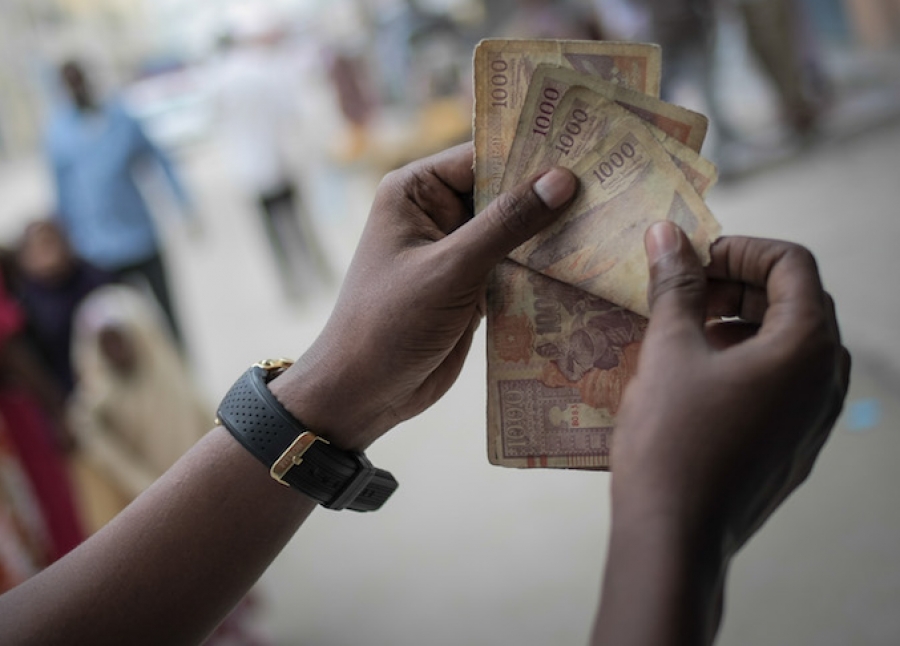
Cash is king for Africans sending money from the UK

The way we stay in touch, do our shopping, and even the ways in which some of us find love, have all gone digital. Yet, for the vast majority of people sending money home to friends and family in Africa, they are still doing it the way they have always

Read More »
Financial Inclusion

MAP DRC diagnostic and roadmap to financial inclusion

The Democratic Republic of the Congo (DRC) may be one of the most challenging environments for financial services. From both a provider and consumer perspective, infrastructure, a rapidly changing financial services landscape and regional disparities pose significant challenges to the market. In 2014, the Ministry of Finance formally requested UNCDF’s

Read More »
Financial Inclusion

Cross-border remittances

The World Bank estimated that in 2016 remittances from migrant workers to developing countries will be worth USD 440 billion. More than twice that of foreign aid. Remittances play a critical role in supporting the welfare of many individuals and households in developing countries. Moreover, remittances can contribute to economic

Read More »
Financial Inclusion

Understanding account usage through a consumer lens

Over the past five years, the move towards digital financial services and simplified account opening procedures has improved the take-up of accounts by the low-income sector. The 2014 global Findex data highlighted that the number of people without access to formal accounts decreased from 2.5 billion in 2011 to 2

Read More »
Consumer Outcomes

Women on the move: Harnessing the economic forces of cross-border mobility in ASEAN

Financial services, including savings accounts and investments into capital assets such as land, have traditionally excluded women in the ASEAN region. Evidence shows that including them can greatly influence the intergenerational wealth of their families. This report focuses on the role played by remittances in achieving broader development objectives with

Read More »
Digital Transformation & Data

Managing risk whilst facilitating innovation: The case of m-insurance in Zambia

Zambia is one of nine countries in sub-Saharan Africa with more registered mobile money accounts than bank accounts (GSMA, 2013). Previous case studies investigating the rise of m-insurance (i.e. microinsurance sold through mobile phones) in Zimbabwe and Tanzania, highlighted that whilst m-insurance initiatives have the potential to enhance access to

Read More »
Digital Transformation & Data

Un-networked retailers: A growing channel for financial services distribution?

Agent networks are critical for expanding access to financial services in developing countries. They enable providers to offer viable cost-effective financial services at scale in developing countries reaching previously unserved and underserved adults. The focus has traditionally been on networked agents but increasingly providers are recognising the potential of un-networked

Read More »
Risk, Remittances and Integrity Programme image
Financial Inclusion

Risk, Remittances and Integrity Programme

The five-year RRI programme is a partnership between FSD Africa and Cenfri. Its aim is to improve welfare and boost investment growth in sub-Saharan Africa. To achieve this, it works to strengthen the integrity and risk management role of the financial sector and to facilitate remittance flows within and into

Delivering on the promise of digitising payments in Zambia
Digital Transformation & Data

Delivering on the promise of digitising payments in Zambia

Digital financial inclusion holds great promise. Last year, a McKinsey report found that digital finance could add up to $3.7 trillion to the GDP of emerging economies within a decade. A recent blog from the World Bank explains that the biggest impact from financial inclusion comes from digital payments and savings accounts. Studies

Payments & Remittances

Cash is king for Africans sending money from the UK

The way we stay in touch, do our shopping, and even the ways in which some of us find love, have all gone digital. Yet, for the vast majority of people sending money home to friends and family in Africa, they are still doing it the way they have always

Financial Inclusion

MAP DRC diagnostic and roadmap to financial inclusion

The Democratic Republic of the Congo (DRC) may be one of the most challenging environments for financial services. From both a provider and consumer perspective, infrastructure, a rapidly changing financial services landscape and regional disparities pose significant challenges to the market. In 2014, the Ministry of Finance formally requested UNCDF’s

Financial Inclusion

Cross-border remittances

The World Bank estimated that in 2016 remittances from migrant workers to developing countries will be worth USD 440 billion. More than twice that of foreign aid. Remittances play a critical role in supporting the welfare of many individuals and households in developing countries. Moreover, remittances can contribute to economic

Financial Inclusion

Understanding account usage through a consumer lens

Over the past five years, the move towards digital financial services and simplified account opening procedures has improved the take-up of accounts by the low-income sector. The 2014 global Findex data highlighted that the number of people without access to formal accounts decreased from 2.5 billion in 2011 to 2

Consumer Outcomes

Women on the move: Harnessing the economic forces of cross-border mobility in ASEAN

Financial services, including savings accounts and investments into capital assets such as land, have traditionally excluded women in the ASEAN region. Evidence shows that including them can greatly influence the intergenerational wealth of their families. This report focuses on the role played by remittances in achieving broader development objectives with

Digital Transformation & Data

Managing risk whilst facilitating innovation: The case of m-insurance in Zambia

Zambia is one of nine countries in sub-Saharan Africa with more registered mobile money accounts than bank accounts (GSMA, 2013). Previous case studies investigating the rise of m-insurance (i.e. microinsurance sold through mobile phones) in Zimbabwe and Tanzania, highlighted that whilst m-insurance initiatives have the potential to enhance access to

Digital Transformation & Data

Un-networked retailers: A growing channel for financial services distribution?

Agent networks are critical for expanding access to financial services in developing countries. They enable providers to offer viable cost-effective financial services at scale in developing countries reaching previously unserved and underserved adults. The focus has traditionally been on networked agents but increasingly providers are recognising the potential of un-networked