Financial Inclusion


Whether it is digital payments, resilience for MSMEs or financial integrity, much of our work is underpinned by the desire to create more inclusive financial systems and services. Cenfri has successfully implemented several multi-year financial inclusion programmes:

Our view is that while financial inclusion targets (such as the percentage of adults with a bank account) are valid, they don’t tell you much when tracked in isolation. It is important to understand whether people use their financial services, and if so, whether this enables them to meet their needs. We have developed six financial inclusion measurement frameworks that outline this expanded understanding of financial inclusion.

We are aware of the importance of women’s financial inclusion and apply a gender lens to much of our work. 

Digital Transformation & Data

Sustainable data collection: Mobile modes

Discover new technologies that enable more sustainable data collection. Sustainable data collection is a central concern for all researchers. Research budgets are under pressure, and response rates using traditional data collection methods are declining. This has put pressure on researchers to critically assess the way in which they design surveys and how they can

Financial Inclusion

Cross-border remittances

The World Bank estimated that in 2016 remittances from migrant workers to developing countries will be worth USD 440 billion. More than twice that of foreign aid. Remittances play a critical role in supporting the welfare of many individuals and households in developing countries. Moreover, remittances can contribute to economic

Financial Inclusion

Understanding account usage through a consumer lens

Over the past five years, the move towards digital financial services and simplified account opening procedures has improved the take-up of accounts by the low-income sector. The 2014 global Findex data highlighted that the number of people without access to formal accounts decreased from 2.5 billion in 2011 to 2

Financial Inclusion

BR Research interviews insight2impact

BR Research recently sat down in Islamabad with a team of researchers from the insight2impact (i2i) facility who were on a visit to Pakistan earlier this month. A data resource centre hosted by South Africa-based think-tank Cenfri and market facilitator FinMark Trust, the i2i facility is sponsored by Bill &

Digital Transformation & Data

Closing gaps, building bridges

Can the location of a platinum mine help financial service providers (FSPs) identify where to locate a bank branch or ATM? What about the locations of bus or taxi ranks? FSPs are increasingly using this type of geospatial (GIS) data to inform their business decisions. Less than a year ago,

Digital Transformation & Data

Spatial Data 2016

Spatial Data for Business Intelligence workshop proceedings. Insight2impact (i2i) in collaboration with Financial Sector Deepening Tanzania (FSDT) hosted the Spatial Data for Business Intelligence workshop on 10-11 November 2016, in Dar es Salaam. The two-day workshop focused on demonstrating the value of spatial data for the financial sector and driving evidence-based decisions

Financial Inclusion

Good intentions

Why what you measure in financial inclusion is so important to the outcomes you achieve Financial inclusion is increasingly recognised as a policy instrument to deliver on policy objectives such as welfare, health outcomes and food security. In fact, it is deemed so important that the recently published United Nations

Financial Inclusion

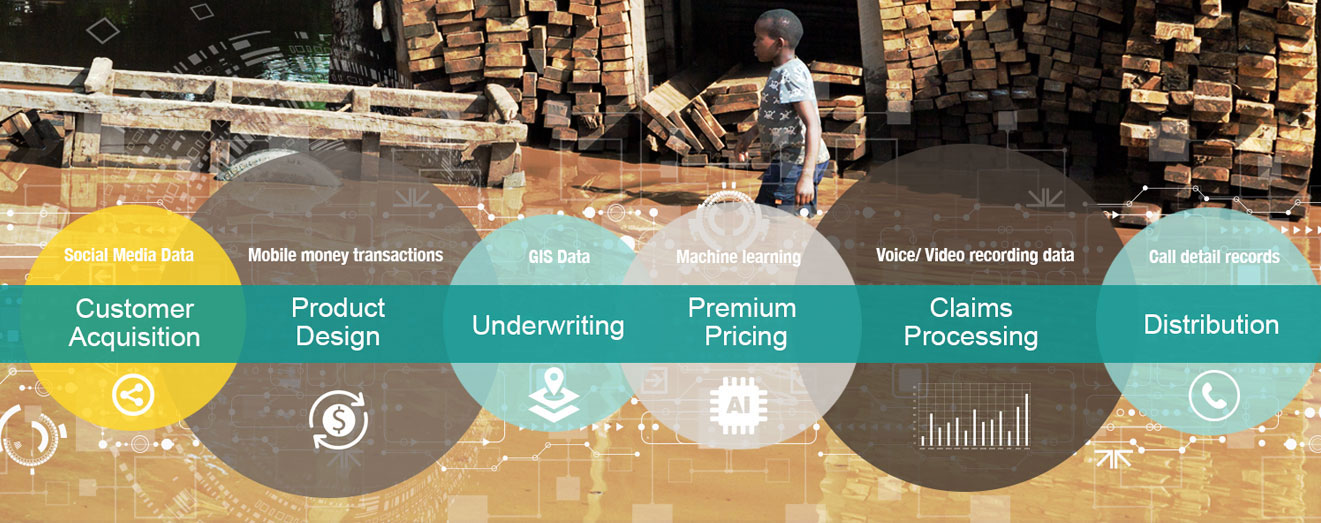
Big data for small policies

What does big data mean for microinsurance? There are 24.2 million adults in Tanzania. About 15 million experienced an insurable event in 2013. Less than 3 million of those reported to have insurance and even less (200,000) actually used insurance to manage their risk. In other words, 14.8 million adults