Resilience & Insurance


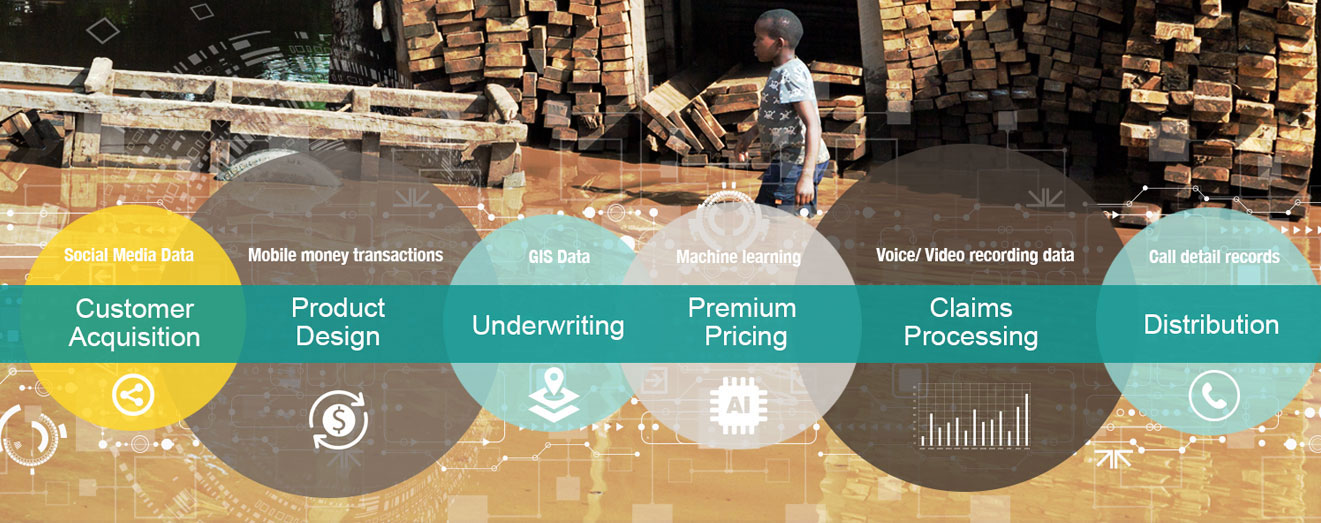
Cenfri has deep insurance expertise from working with the insurance markets in Africa, Latin America and Asia. Insurance penetration in these markets is often low and we understand the need for responsible market innovation so that insurance fulfils its optimal role in building resilience, supporting business growth, and contributing to broader policy and development objectives.

The breadth of Cenfri’s insurance and resilience work spans diagnostic studies, development of global and regional standards and national regulations, technical assistance and innovation support (to regulators and the private sector), innovation studies, MSME-tailored resilience solutions, improved risk management in response to climate-related events, and definitive work on cell captives.

Our partners include GIZ, Access to Insurance Initiative (A2ii), the UK’s FCDO (formerly DFID), the FSD Africa and other financial sector deepening trusts, the Swiss Capacity Building Fund, FSCA, Hollard, Santam, Old Mutual, AXA, Britam, Generali, the Microinsurance Network, UNCDF, UNDP, The World Bank, IFC, IADB and ADB. 

Financial Inclusion

Understanding account usage through a consumer lens

Over the past five years, the move towards digital financial services and simplified account opening procedures has improved the take-up of accounts by the low-income sector. The 2014 global Findex data highlighted that the number of people without access to formal accounts decreased from 2.5 billion in 2011 to 2


Read More »
Could this be microinsurance's uber moment?
Resilience & Insurance

Could this be microinsurance’s uber moment?

Over the last decade, microinsurance has grown from covering fewer than 100 million risks to covering more than 500 million. But are we overstating what this growth means for insurance market development? The diagram below illustrates how an insurance market typically develops in a country: from initially just underwriting large

Read More »
Governance, Policy & Regulation

Reading between the data

In 2014, 22.2% of adults in Zambia were covered by insurance. In 2015, just 2.6% were. If you are working on insurance in Zambia you would probably think the magnitude of this change was because of the discontinuing of the Airtel Life product. But even if you exclude Airtel Life

Read More »
Financial Inclusion

Big data for small policies

What does big data mean for microinsurance? There are 24.2 million adults in Tanzania. About 15 million experienced an insurable event in 2013. Less than 3 million of those reported to have insurance and even less (200,000) actually used insurance to manage their risk. In other words, 14.8 million adults

Read More »
Digital Transformation & Data

Managing risk whilst facilitating innovation: The case of m-insurance in Zambia

Zambia is one of nine countries in sub-Saharan Africa with more registered mobile money accounts than bank accounts (GSMA, 2013). Previous case studies investigating the rise of m-insurance (i.e. microinsurance sold through mobile phones) in Zimbabwe and Tanzania, highlighted that whilst m-insurance initiatives have the potential to enhance access to

Read More »
Digital Transformation & Data

Un-networked retailers: A growing channel for financial services distribution?

Agent networks are critical for expanding access to financial services in developing countries. They enable providers to offer viable cost-effective financial services at scale in developing countries reaching previously unserved and underserved adults. The focus has traditionally been on networked agents but increasingly providers are recognising the potential of un-networked

Read More »
Woman from Ghana with cellphone
Resilience & Insurance

Assessing the growth potential of digital microinsurance

Digital financial services are increasingly seen as a way to address the high transaction costs impeding scale and access in financial services. There is growing interest in how digitisation could impact microinsurance, whether through distribution, scale, collections, or improving the efficiency of the value chain. Digital microinsurance is generally broader

Read More »
Resilience & Insurance

Do life microinsurance schemes with low claims ratios offer value?

Microinsurance is seen as a mechanism through which low-income consumers can manage their risks, reduce their vulnerability and improve their welfare. The guaranteed benefit provided by insurance also allows for the development of critical services, which may otherwise not have been available to the community. While extending coverage by insurance

Read More »
Financial Inclusion

Understanding account usage through a consumer lens

Over the past five years, the move towards digital financial services and simplified account opening procedures has improved the take-up of accounts by the low-income sector. The 2014 global Findex data highlighted that the number of people without access to formal accounts decreased from 2.5 billion in 2011 to 2

Could this be microinsurance's uber moment?
Resilience & Insurance

Could this be microinsurance’s uber moment?

Over the last decade, microinsurance has grown from covering fewer than 100 million risks to covering more than 500 million. But are we overstating what this growth means for insurance market development? The diagram below illustrates how an insurance market typically develops in a country: from initially just underwriting large

Governance, Policy & Regulation

Reading between the data

In 2014, 22.2% of adults in Zambia were covered by insurance. In 2015, just 2.6% were. If you are working on insurance in Zambia you would probably think the magnitude of this change was because of the discontinuing of the Airtel Life product. But even if you exclude Airtel Life

Financial Inclusion

Big data for small policies

What does big data mean for microinsurance? There are 24.2 million adults in Tanzania. About 15 million experienced an insurable event in 2013. Less than 3 million of those reported to have insurance and even less (200,000) actually used insurance to manage their risk. In other words, 14.8 million adults

Financial Inclusion

Customer views on abuses in the informal funeral parlour market in South Africa

Funeral parlours and burial societies deliver value to consumers by meeting essential functional needs, but also by meeting social and cultural needs. Funeral parlours have a powerful position in the funeral value chain. This exposes consumers to abuse. Such abuses are common and cut across different spheres, such as health

Digital Transformation & Data

Managing risk whilst facilitating innovation: The case of m-insurance in Zambia

Zambia is one of nine countries in sub-Saharan Africa with more registered mobile money accounts than bank accounts (GSMA, 2013). Previous case studies investigating the rise of m-insurance (i.e. microinsurance sold through mobile phones) in Zimbabwe and Tanzania, highlighted that whilst m-insurance initiatives have the potential to enhance access to

Digital Transformation & Data

Un-networked retailers: A growing channel for financial services distribution?

Agent networks are critical for expanding access to financial services in developing countries. They enable providers to offer viable cost-effective financial services at scale in developing countries reaching previously unserved and underserved adults. The focus has traditionally been on networked agents but increasingly providers are recognising the potential of un-networked

Woman from Ghana with cellphone
Resilience & Insurance

Assessing the growth potential of digital microinsurance

Digital financial services are increasingly seen as a way to address the high transaction costs impeding scale and access in financial services. There is growing interest in how digitisation could impact microinsurance, whether through distribution, scale, collections, or improving the efficiency of the value chain. Digital microinsurance is generally broader

Resilience & Insurance

Do life microinsurance schemes with low claims ratios offer value?

Microinsurance is seen as a mechanism through which low-income consumers can manage their risks, reduce their vulnerability and improve their welfare. The guaranteed benefit provided by insurance also allows for the development of critical services, which may otherwise not have been available to the community. While extending coverage by insurance