How one social entrepreneur uses data to illuminate blind spots in her businesses
How one social entrepreneur uses data to illuminate blind spots in her businesses
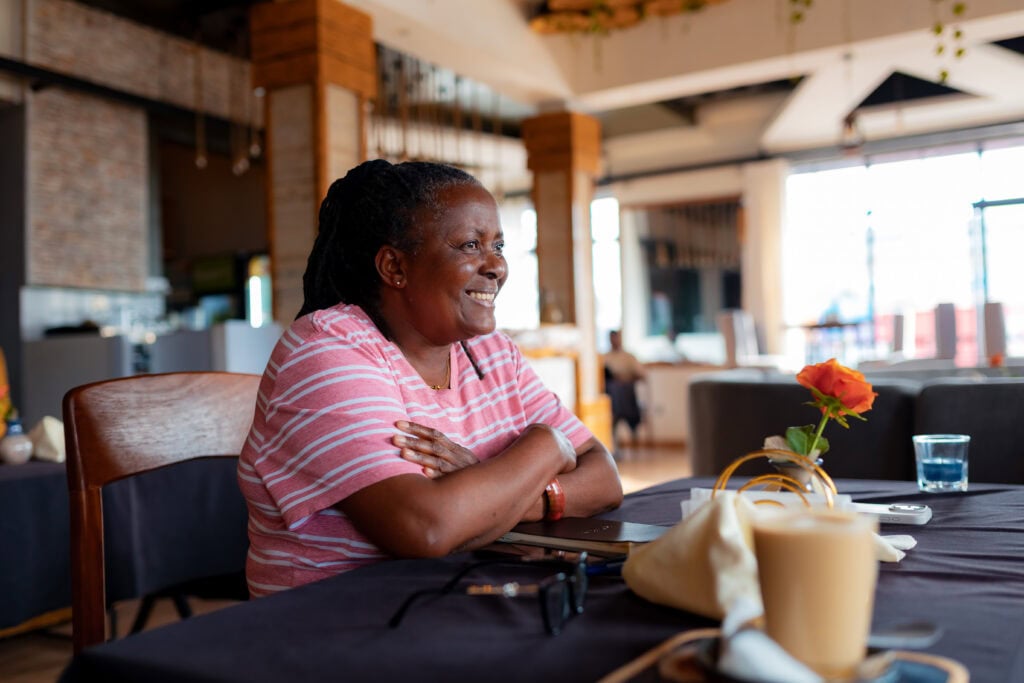
17 September, 2026 •When Bella Twizerimana foreclosed on two houses during her time as a bank manager, she made a decision that would eventually reshape a corner of Musanze, Rwanda’s, economy. She couldn’t do it again.
Watching people lose their homes through a system she was part of pushed her out of banking and into business. She started a small shop selling bread she had made herself.
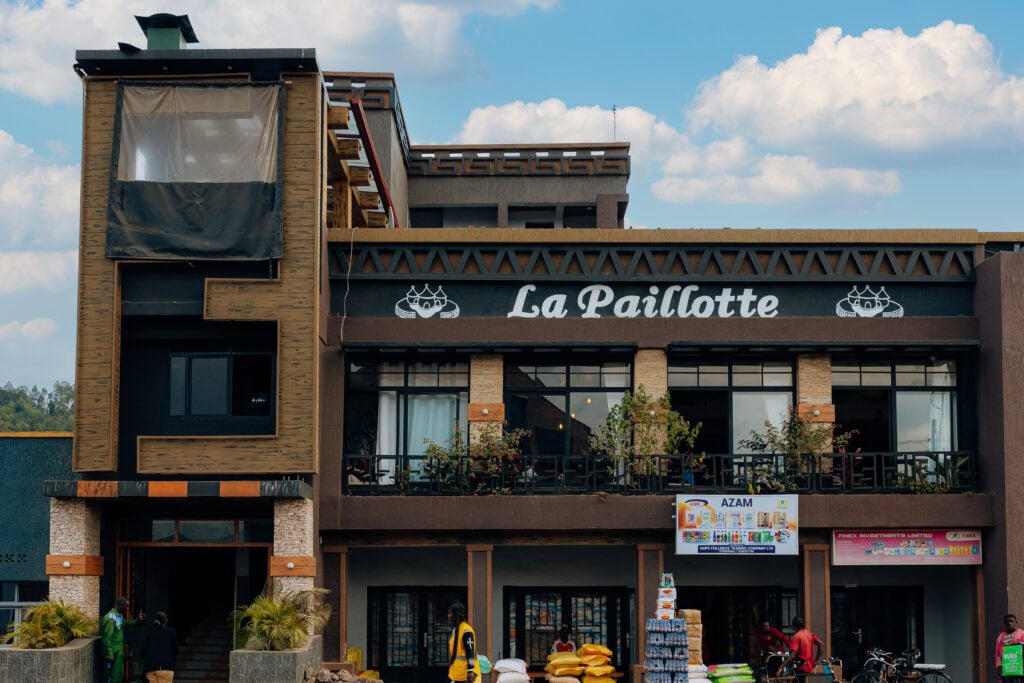
What started as a six-table bakery has grown into a conglomerate spanning a restaurant, a hotel, an island campsite, and a catering operation serving schools and institutions alongside a registered non-profit that channels half of the business’s income into housing, education, and land access for some of Musanze’s most vulnerable families.
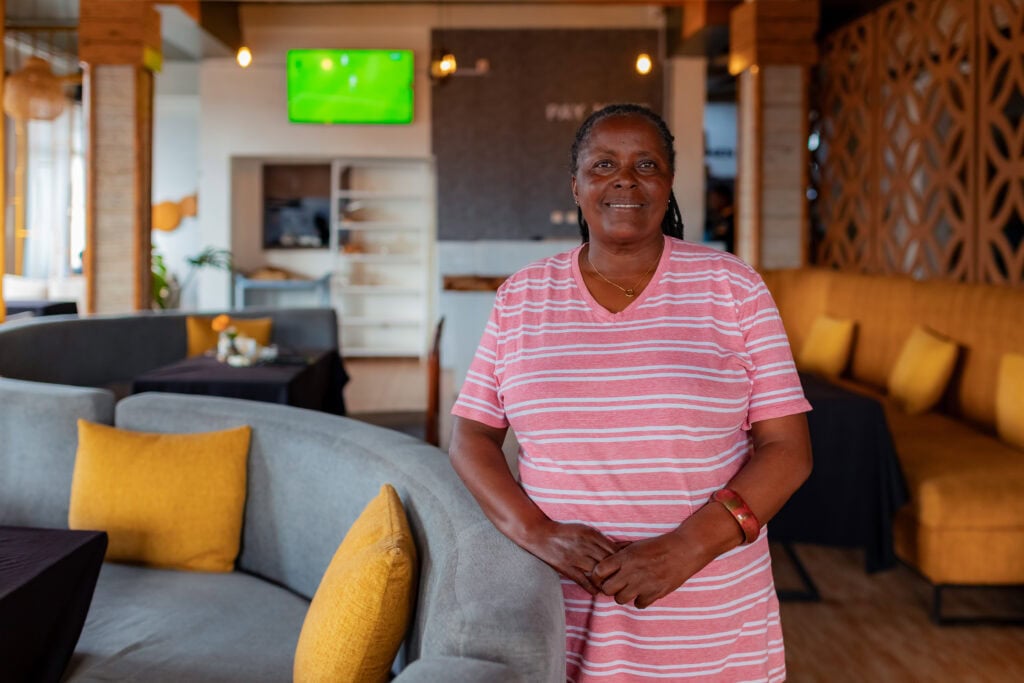
Today, La Paillotte employs 40 permanent staff, almost all of them young people. Twizerimana describes herself and her head chef as “the only older ones” left standing.
It raises an obvious question, how have they managed to run a growing enterprise and an ambitious social initiative? La Paillotte’s answer, so far, has been to build the operational backbone that makes it possible – most recently through a digitalisation intervention under the Rwanda Economy Digitalisation (RED) Programme.
La Paillotte’s growth was not planned as a conglomerate from day one; it grew in response to demand. The business opened in 2010 selling bread and tea, with just two tables inside and four outside and room for 12 people,. Customers kept asking for more proper meals, which meant building a kitchen, then catering for larger events, then contracts with schools and institutions once word spread.
Twizerimana took on operations herself in the early years, staying close to every part of the business as it expanded. Growth on this scale, across many business lines, eventually asked more of the business than personal oversight could give it.
The social mission behind the business
The social programme running alongside La Paillotte’s commercial operations is not a side project. Twizerimana states plainly that the business model exists to fund it, “Half of the company’s income is directed to social responsibility, with the rest supporting operations and shareholders,” she said.
That mission traces back to her time in banking, and to a partnership she formed with organisations supporting homeless young people and pregnant teenage girls as a cause she felt aligned closely with why she’d wanted to start a business in the first place. From there, La Paillotte built out a small but structured set of interventions.
A house was established where homeless children could stay while their families were located. Alongside this, informal education support was provided to the children until they could be placed in formal schooling. Investigating why children were ending up homeless in the first place led to a second, more structural programme: “Land for the Landless,” where families experiencing poverty are given annual access to rented land along with seeds, allowing them to cultivate crops and generate income. Some families have gone on to buy goats, chickens, and other assets from the proceeds. A third strand offers baking training to people from underprivileged backgrounds, several of whom now run their own bakeries as a direct echo of the gap Twizerimana identified when she first started out.
Asked what success looks like; she doesn’t point to revenue. “My dream has been achieved,” she says of the social programme, which is reaching people the way she’d originally intended.
The problem that came with growth
Running four or five distinct business lines and a non-profit programme on intuition, and paper records eventually became unworkable. Twizerimana describes a business where expenses, income, profit, debt, seasonal performance, inventory, and staff information were all difficult to track.
She had looked for a solution before finding one that worked. A group from Kenya introduced her to Odoo, an operations management system, and she recognised it as a potential answer until she saw the cost and stepped back. It was eventually the RED Programme’s work in supporting business digitalisation that opened a more accessible path to the same outcome. The RED Programme is implemented by Cenfri in partnership with the Mastercard Foundation and the Rwandan Ministry of ICT and Innovation.
The shift wasn’t only technical. Twizerimana is candid that getting staff to adopt a data-driven way of working was, at first, a mindset problem as much as a system one. Tracking the business now meant staff tracking their own work too, and that took some adjustment.
The result, though, was a level of visibility La Paillotte hadn’t had before. Where the business once operated with significant blind spots across finance and operations, Twizerimana now describes being able to track everything in one place. For a business managing a hotel, a restaurant, a bakery, catering contracts, and a non-profit simultaneously, that shift from fragmented paper records to a functioning operating system is what makes continued scale realistic rather than reactive.
Twizerimana’s ambitions for La Paillotte going forward are grounded rather than expansive for the sake of it: sustaining what’s been built, staying competitive in Musanze’s market, continuing to innovate, creating more local employment, and deepening the social programmes that shaped the business from the start. She’s explicit that all of it depends on the same thing that got the business here: operations that are well tracked and well monitored, so that growth doesn’t come at the cost of control.