New digital system helps Shimirwa master the Kigali market
New digital system helps Shimirwa master the Kigali market
5 November, 2026 •When Beatrice Nyirabahire gave birth in Rulindo, Rwanda, she could not find a good bowl of porridge that is usually given to mothers post-partum. Not because porridge was scarce, but because the quality simply was not there. The flour on offer was dusty, low-grade, and nutritionally untrustworthy. The kind of product that existed because nothing better had come along. For most people, that would have been simply a frustration and nothing more, but for Nyirabahire, it became a business.
“The gap was here in Rulindo, and it wasn’t just here,” she recalls. “It was very hard to get good porridge in this region after giving birth. Even if you found it, it wasn’t of the highest quality.”
Nyirabahire worked in banking. She had a stable career but she always felt there was more she could do. That postpartum moment of truth revealed something so she went home and started experimenting.

Six formulas and a family vote
The early research and development for what would later become Shimirwa Ltd happened entirely at home. Nyirabahire, her husband, a Chemistry graduate who now serves as the company’s quality advisor, and their children tested six home-developed grain formulas. They narrowed the field to two. They cooked them. They tasted them. They approved. They narrowed these down to two, which they cooked, tasted and approved.
“Everyone who tasted it would always say the porridge tasted very good,” she says.
She began selling the porridge mix quietly through a small store she already operated, alongside maize flour. Word spread faster than she expected. Customers came back, new ones arrived. And then came the moment that changed the trajectory of the business entirely.
A young woman in Musanze bought 9 kilograms and cooked it in her compound. Neighbours gathered, shared the meal and all loved it. One neighbour happened to be a retailer. The following day, he called Nyirabahire and ordered 100 kilograms.
“I knew then that people were starting to like this porridge,” she says. “Many more people wanted to buy it. It was loved but it had no name and people would not know what to buy when they went shopping.”
She decided to invest in her idea. She sold livestock and bought the equipment she needed. She began producing flour at home. She worked late into the night, using the same scale from her shop.. Her family packed, weighed and loaded alongside her. The first batch was 30 kilograms. She loaded it into the family’s small car and drove to Musanze to sell it herself.
“I did not care about the fuel or logistics. I just wanted to sell.”
Selling beyond the neighbourhood
Nyirabahires determination defined Shimirwa’s early growth. She spent four months driving daily to Musanze, going door to door, introducing the product, letting the smell and quality speak for itself. According to her, it was slow, and exhausting, but it worked.
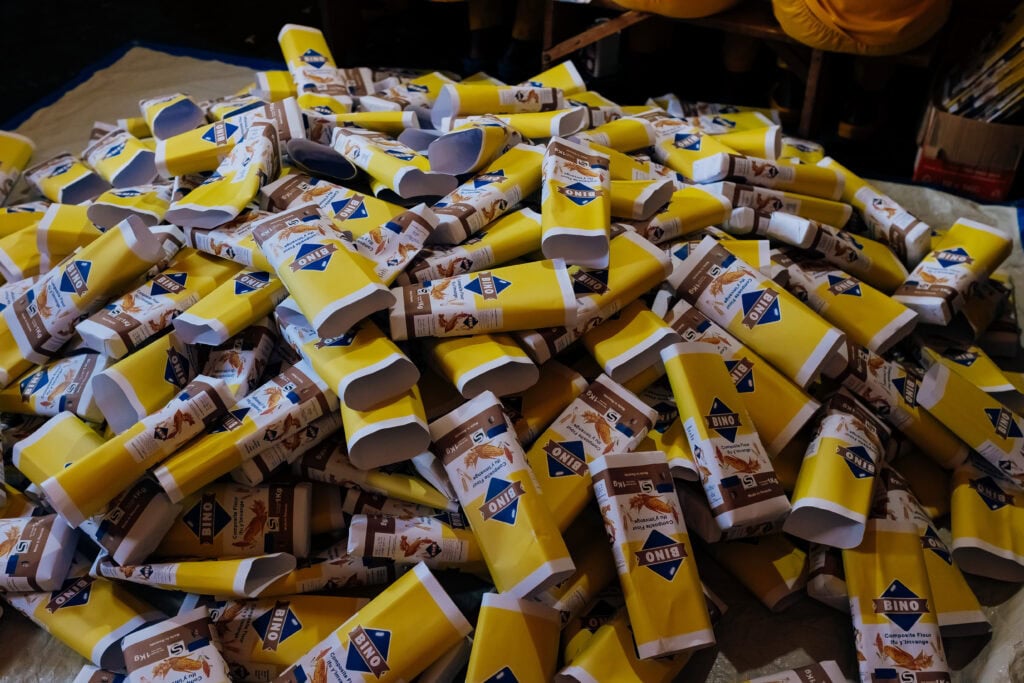
By July 2021, Shimirwa Ltd was formally established. The company now had two products: BINO, the standard porridge flour, and KURA, a formulation specifically designed for children. By December of that same year, just five months after the official launch, Nyirabahire appointed a dedicated production manager. She wanted to establish quality standards from the start rather than adjusting processes later. That early investment paid off, Shimirwa now holds the Rwanda Standards Board (RSB) standardisation mark.
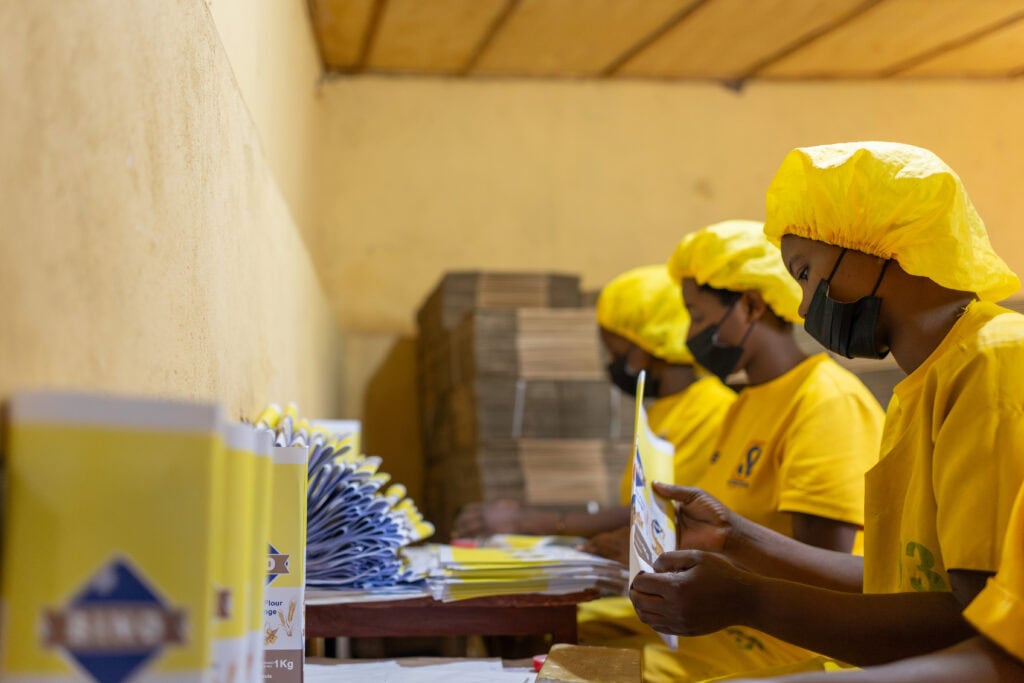
The company grew from a family operation to a team of 19 employees. Eight of those were recruited directly from a skills training programme Shimirwa ran in partnership with the Rwanda TVET Board, teaching young people grain preparation and quality control procedures. Today, Shimirwa products reach 30 retailers across Gicumbi, Musanze, Rubavu, Karongi, and Kigali.
Kigali, however, presented a different challenge entirely.
Cracking the market that pushed back
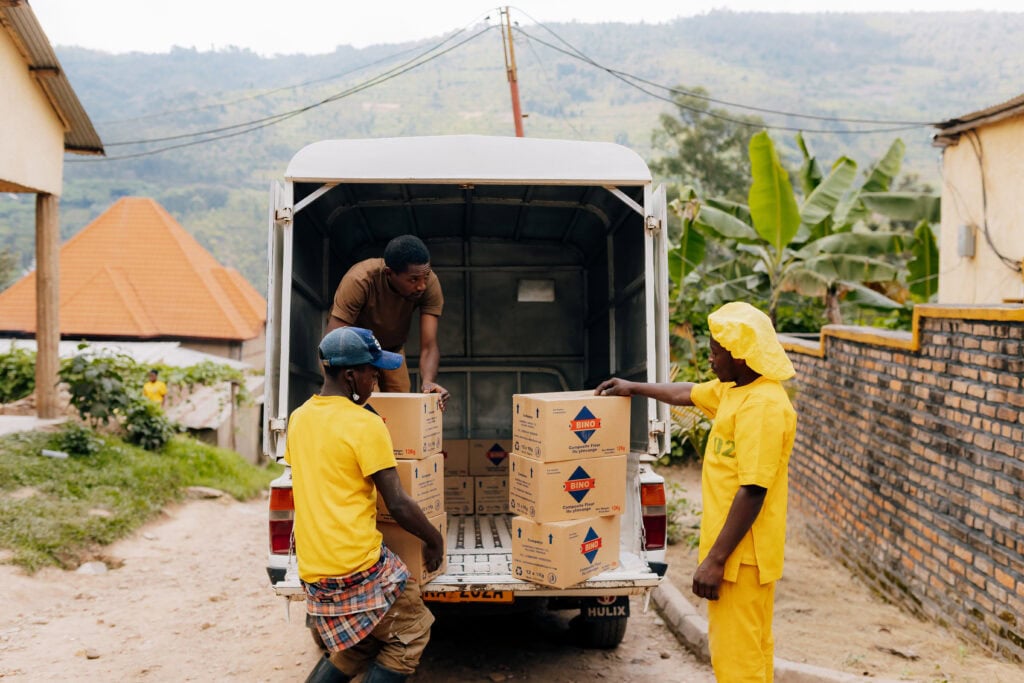
For Nyirabahire, the city required the same approach she had used in Musanze, going neighbourhood to neighbourhood, shop to shop. But at greater cost, greater distance, and with far less predictability in return.
“It was very difficult,” she says plainly. “To get retailers to retain the product and sell it in their location, some people just did not get it.”
The fundamental problem was a mismatch between where demand was building and where supply was sitting. Nyirabahire and her team would move through neighbourhoods, find customers who loved the product, and direct them to partner retailers. But when those customers went back to the retailers looking for more, the retailers had not restocked. The supply chain stalled, potential sales evaporated. The entrepreneur could not track, in real time, which of her 30-plus retailers still had stock and which had run dry.
“When they went to ask the retailers for more products, the retailers did not have them,” she explains. “So they had to call us again.”
She was managing growth she could not see clearly and paying the price. Between logistics, delayed payments, and the hidden costs of production, she estimates losses of around 1.5 million Rwandan francs. “I lost around 1,500,000 Rwf because of so many logistical issues,” she says. “People who bought and don’t pay, the cost of production, logistics like transport.”
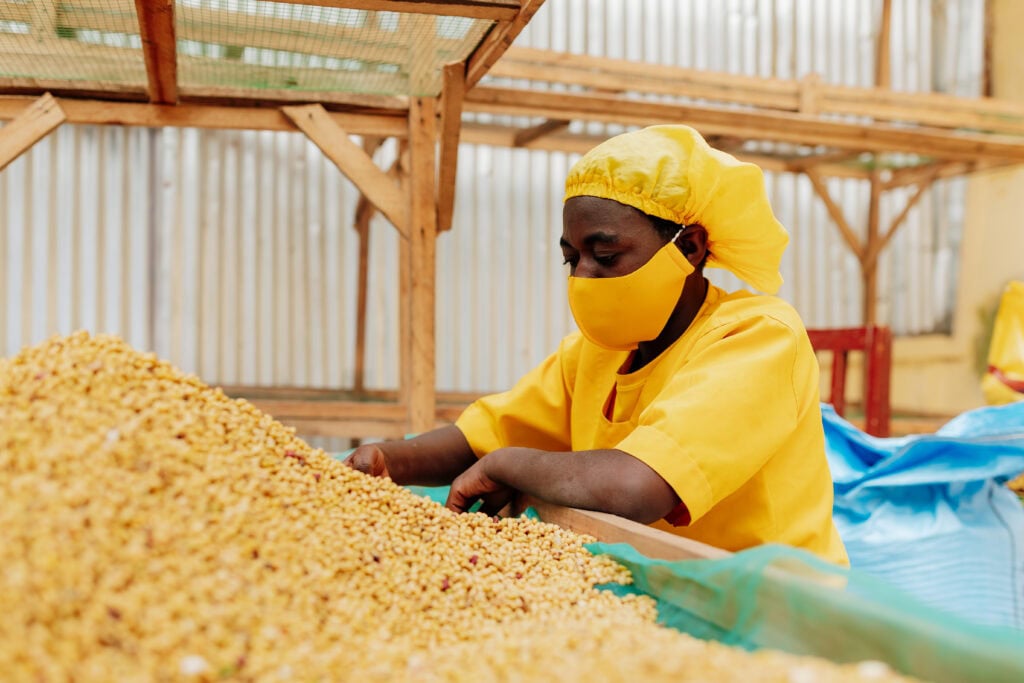
The production cost challenge ran deeper still. Shimirwa’s grain goes through extensive cleaning and roasting before it becomes flour. Put 100 kilograms of maize into the roasting machine, and 82 kilograms come out the other side. That 18% loss has a cost but without a clear system for tracking it, pricing decisions were being made in partial darkness.
“We needed a system to help us see if we are making a profit or loss when it comes to the cost of production,” she says. “I don’t think it was difficult. But we needed to see it.”
Shimirwa received support from the ICT Chamber to implement a digital inventory management system through the Rwanda Economy Digitalisation (RED) Programme, a multi-partner initiative involving MINICT, Cenfri, and the Mastercard Foundation.
For the first time, Nyirabahire could see her entire distribution network at a glance. She could track which retailers had stock, which were running low, and where the gaps were. More customers found Shimirwa online, through e-commerce platforms and the company website. She could match each one to a nearby retailer with stock on hand, instead of losing the sale or handling fulfilment herself.
“A lot of people have called us and we would find ourselves linking them to our retailers since they wanted just a few products,” she explains. “We would also use our system to see which retailers still have products and then resell them to the new customers.”
The system did not just solve a logistics problem. It changed how Nyirabahire understood her own business. The visibility she now had over stock movement, retailer performance, and customer demand gave her a clearer basis for pricing decisions, for knowing where to focus sales effort, and for tracking the effect of price changes in real time.
“We can track who is still buying and where we need to put much more effort,” she says.
Shimirwa now sells 20 tonnes of BINO per month. Kigali, once a source of constant friction, now has five active retailers, one in Nyabugogo, Kabuga, Nyacyonga, Downtown, and Gikondo. Barcode registration for supermarket distribution is the next step on the horizon, one the eager entrepreneur expects will open the brand to a much wider market.