When B2B suppliers go B2C: Lessons from Izere Trading Ltd
When B2B suppliers go B2C: Lessons from Izere Trading Ltd
5 October, 2026 •How Izere Services and Trading Ltd used discipline, compliance, and digital tools to graduate from a single Rwandan hotel’s backup supplier into a business ready to sell directly to consumers.
For most business-to-business (B2B) suppliers, selling directly to individual consumers is not a natural next step. It requires a level of visibility, trust, and operational control that B2B relationships, built on long-standing contracts and personal familiarity, rarely demand.
Izere Services and Trading Ltd, a Kigali-based food and vegetable supplier founded by Mumporeze Angelique in 2013, offers a useful case study in how that transition actually happens. It wasn’t a single decision to “go digital” or “go B2C.” Rather, it was the cumulative result of over a decade spent building the kind of business that could survive a major change.
Earning the right to grow
Mumporeze’s entry into the supply business began modestly. Having briefly met the director of the Hôtel des Mille Collines in Kigali, she requested a meeting and proposed herself as a vegetable and food supplier. The response was candid: this was a demanding business, and few could sustain it. Rather than push back, Mumporeze reframed her offer; she didn’t need to displace the hotel’s existing suppliers, only to be kept in mind as an alternative. The hotel gave her a list of what it typically ordered, along with prices, and she went to work sourcing it, starting at the Kimironko market and building relationships with suppliers further upcountry.
To work with Hôtel des Mille Collines, she needed a Taxpayer Identification Number (TIN), a registered company, and the ability to issue an Electronic Billing Machine (EBM) receipt . Her husband, who already ran a transport company, suggested she register a separate entity for this new venture. She named it Izere, meaning ‘have faith’ reflecting her belief that the business was aligned with a larger purpose. Registration went through the Rwanda Development Board in 2013, and shortly afterward, Mille Collines’ procurement office called. Izere had its first client. Even the working capital for that first order came from family, borrowed from her husband’s transport business and repaid once the client paid her.
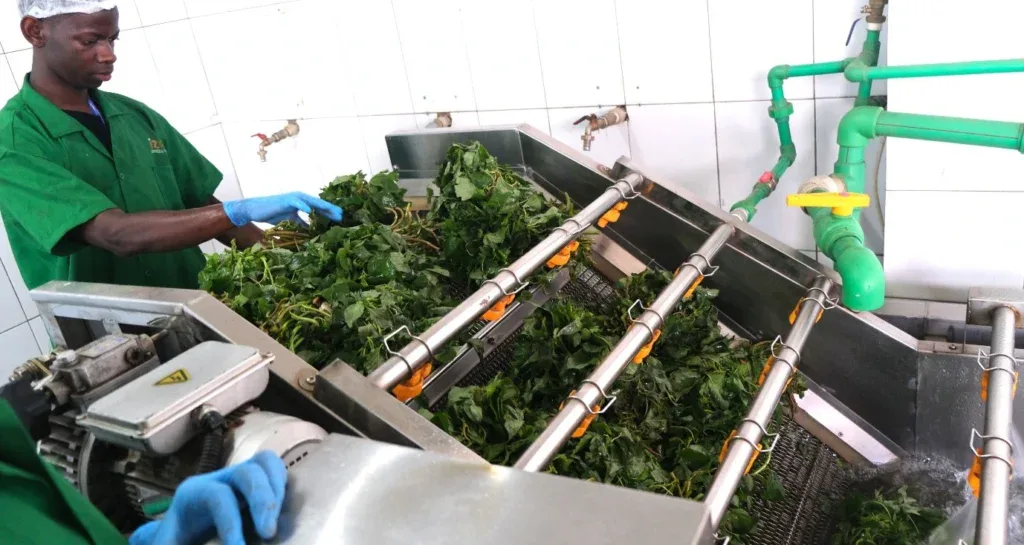
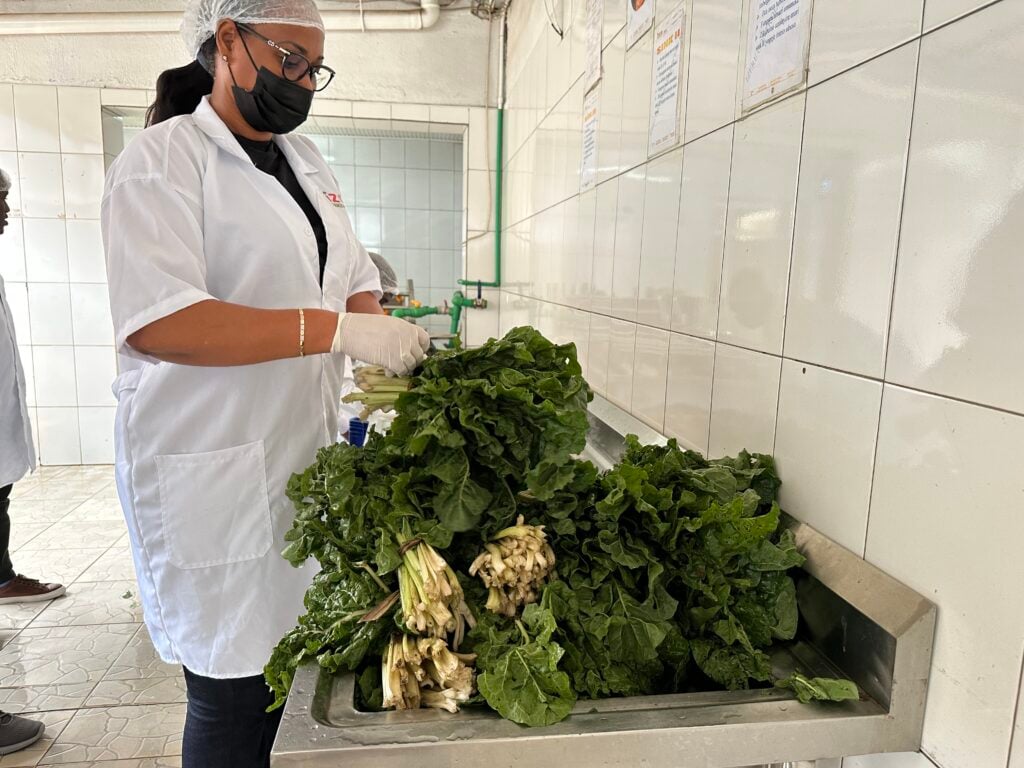
What set Izere apart early on was a willingness to over-invest in product presentation and hygiene before anyone asked for it. For her first delivery, Mumporeze used crates, a clean van lined with white sheeting, and washed produce. Instead of being welcomed, the approach caused confusion. The belief at the time was that washed vegetables would not last as long. The practice was later adopted as a government-enforced standard, and when other suppliers struggled to comply, Izere was already positioned to meet it.
The founder became Mille Collines’ primary supplier as a result, and word travelled. Staff who had worked there told other hotels about Izere’s reputation, including Radisson Blu Kigali, which reached out to her directly.
To retain and expand that trust, Mumporeze pursued HACCP food-safety certification, held by only a few local suppliers at the time. She also took out credit to acquire a refrigerated van and a cold room.
Informal recordkeeping proves inadequate for a growing business
As its client list and supplier network expanded, Izere grew from three staff to 21 permanent employees, the majority of whom are/were women and young people. But growth surfaced a problem that no amount of goodwill could solve; the informal tracking methods that worked at a small scale broke down at a larger one. Suppliers would report incorrect figures; outstanding debts Mumporeze believed were settled turned out not to be, and even her own staff sometimes reported inaccurate numbers. Tracking who had supplied what, when, and what remained to be paid became increasingly difficult to manage based on memory and paper records. Unreliable internal records are precisely the kind of weakness that limits how far, and how safely, a business can expand.
The turning point was adopting Appzacu, an application that let Izere monitor suppliers directly, confirm who had delivered what and when, and flag outstanding payments. This closed the gap between what staff and suppliers reported and what was actually owed. It’s a modest-sounding fix, but it did something significant: it gave Izere an accurate, real-time picture of its own operations for the first time.
With its internal operations under control, Izere was in a position to look outward. Until recently, the business operated purely on a local, business-to-business basis, selling almost exclusively to hotels. Through the support of Cenfri and its partners, delivered as part of the Rwanda Economy Digitalisation (RED) Programme, Izere developed its first website, a step intended to open the business to individual, direct-to-consumer orders rather than company ones alone. The founder now describes receiving calls from people who found the business online, a channel of demand that simply did not exist for Izere before.
For now, Mumporeze is working to improve the business facilities and other necessities so Izere can deliver high-quality produce to customers.
Izere’s path offers a broader lesson for other B2B suppliers eyeing a similar move into e-commerce: the digital storefront is often the most visible step, but it is rarely the first one. It sits on a foundation of internal systems accurate enough to support growth. Without such a foundation, a consumer-facing channel would be difficult to sustain.