
When intuition is not enough: How data transformed Whiz Upp
When intuition is not enough: How data transformed Whiz Upp
31 August, 2026 •Hawa Chloe Niyigena built a Rwandan juice company from scratch in her family’s kitchen but transitioning the business from survival to strategy meant learning to trust data over instinct.
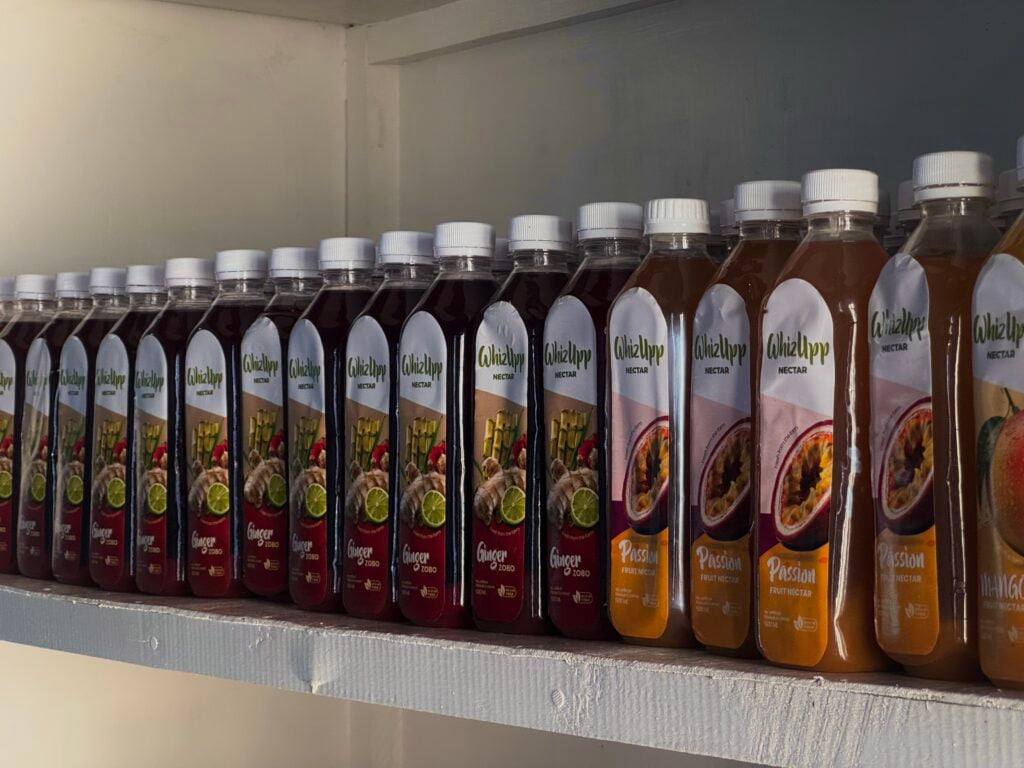
For years, Niyigena believed passion fruit was the backbone of her juice business. It was consistently moving in high volumes, and Simba, one of Rwanda’s major supermarket chains, was ordering it regularly. Every signal she could see told her it was her best product. She was wrong.
It was only when Whiz Upp, her natural juice company, began using a business management system through the intervention of the Rwanda Economy Digitalisation (RED) Programme that the full picture emerged. Ginger was outselling passion fruit in small supermarkets across Kigali. more critically, it had a significantly higher profit margin.
This moment of clarity captures exactly what the digitalisation intervention was designed to produce. Specific insight that allows an entrepreneur to make decisions that are worth making. “If I was not recording, I could have been misled and said passion is selling the most,” she said.
Where it all began
Niyigena’s path into entrepreneurship was not planned so much as it was stumbled upon, in the best possible way. A graduate of the Rwanda Institute for Conservation Agriculture (RICA) in food processing, she spent several months after graduation writing business plans and trying to identify the right product to launch. She specialised in food processing but could not settle on what to make or sell.
The answer arrived one December in 2023 during mango season. Walking through the market and noticing an abundance of the fruit, she decided to make a small batch of juice for her family. When neighbours tried it, they immediately asked if they could buy more/ some. The first batch sold quickly, and soon People came back and asked for her contact details. just like that, a business was born.
By early 2024, she had moved beyond/ outgrown family orders and was producing for small supermarkets around Musanze, working from her family’s kitchen with nothing more than a domestic blender. She started with two products: mango and tree tomato juice. Passion fruit joined next, followed eventually by ginger, a product that would become central to the Whiz Upp story.
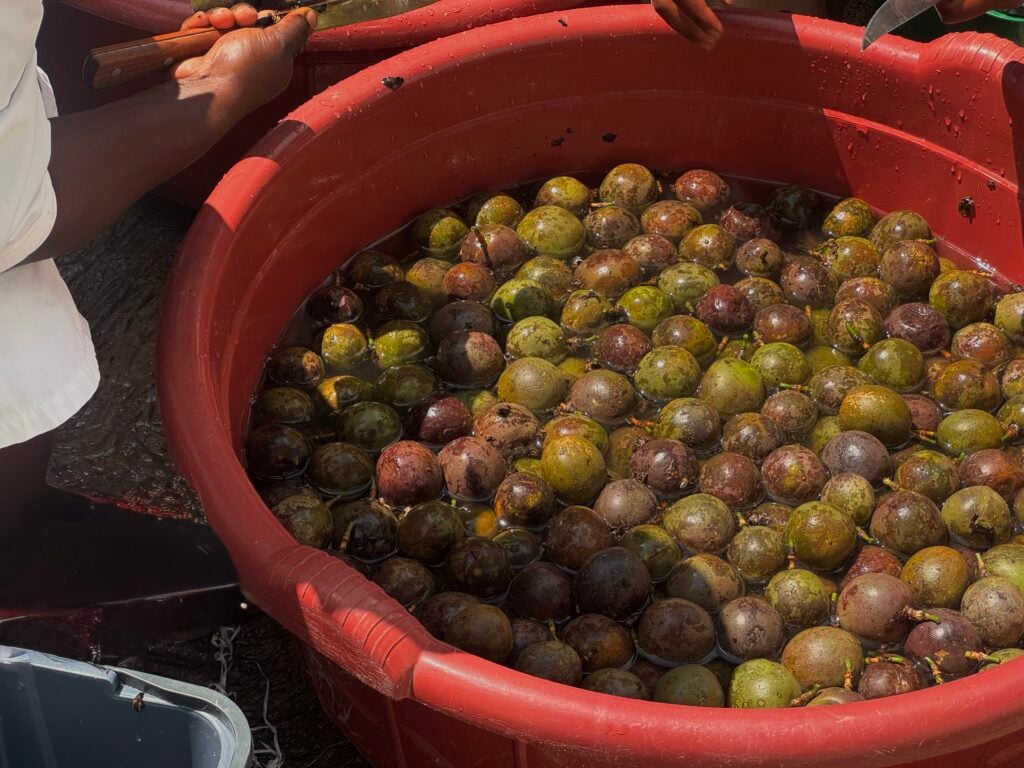
The early days
The early years were defined by resourcefulness and personal bandwidth. For the first two weeks, Niyigena ran everything alone: washing, producing, selling. She quickly recognised that this was unsustainable. She hired two women to help with production, then added more as orders grew. / expanding her team as orders grew.
Everything was tracked by hand and in Excel spreadsheets. Client credit lists. Supplier contacts. Inventory counts. Production volumes. Sales by location. It all lived either in notebooks or, increasingly, in her head. She describes the period with a directness that makes the challenge vivid: “Everything was in my mind. Management, production, sales, marketing, everything.”
Decisions were made on intuition and observation. She supplied small supermarkets, watched which ones actually moved product, and gradually shifted toward working with more reliable buyers. She developed an early aversion to certain clients, supermarkets with poor payment reputations, she learned, could quietly kill a small business by holding capital for months at a time.
The turning points
Several decisions marked visible inflection points in Whiz Upp’s growth. Each one reflects the same underlying logic: solve the real problem, not the surface one.
The first was packaging. Whiz Upp’s original bottles looked indistinguishable from competitors. Customers had to read the label carefully to identify the brand. After Niyigena upgraded the packaging’s visual identity, sales increased. The product had not changed. The quality had not changed. But the visibility had.
The second was hiring a food scientist to manage food safety protocols such as sterilisation, and disinfection throughout the production day. As a result, returns dropped sharply and shelf life improved.
The third was moving into Simba. Graduating from small shops to a major supermarket chain brought Whiz Upp visibility. High foot traffic meant the product was seen by far more people. Even when a branch underperformed, the brand presence mattered.
And the fourth, the one that changed everything, was digitisation.
What the system revealed
When Whiz Upp joined the RED Programme, led by the Ministry of ICT and Innovation, Cenfri, and the Mastercard Foundation, the business was introduced to Odoo. This comprehensive management system tracked supplier records, inventory, production, sales and accounting, revealing a new level of visibility into her operations
Batch numbers, for instance, sound administrative, but they are actually a quality control mechanism. By assigning each batch a tracking number that travels with the product to every supermarket, she can trace any quality issue back to a precise production run, date and shelf. In a notebook, this kind of traceability is practically impossible.
But the most clarifying insight came from the sales data. “I have a small profitability margin on passion, while I have a lot on the ginger. It’s moving a lot, people are loving it and I had no idea.”
From that moment on, Niyigena understood her entire product portfolio. Simba’s high-volume orders for passion fruit had created an illusion of success. She began producing more ginger. She started exploring how to get it listed in Simba, a process she knew would not be simple. Introducing a new product to a major retail chain required its own kind of persistence, but she was now armed with data that justified the push.
She also reassessed her green Mojito product using the same lens: if it had the same market exposure as passion fruit, would it sell as well? The data suggested yes.
MSME growth across multiple dimensions
Between her kitchen launch and today, Whiz Upp has grown from two products to eight. The team has expanded from Niyigena alone to 15 permanent employees. Around 12 in production, a finance assistant to manage accounts and sales women who run distribution. Equipment that was unimaginable a few years ago now lines the production facility. She also moved her business location from Musanze to Kamonyi as it was closer to her suppliers and her customers.
When asked to quantify her growth, Niyigena resists a simple percentage. What she points to instead is the quality of her decisions. She now knows why she is making a choice, not just that she is making one. She can trace the logic from sales data to production planning to supplier negotiations. The business is running on a combination of intuition and evidence, and she knows the difference between the two.

Advice to other entrepreneurs
Niyigena is direct about what she would tell another young entrepreneur, particularly a young woman starting out.
Her advice is to take risks and believe in yourself. She does not romanticise this, but she is firm on her belief that what kept Whiz Upp moving through difficult periods was the refusal to stop, belief in a product, and sustained by evidence over time. This gives an entrepreneur the energy to keep improving supply chains, upgrading machines and finding better buyers.
“I just believed in my dream and kept working. If I didn’t push things, make them happen, make them move faster I could still be waiting.”
Whiz Upp and the RED Programme
Whiz Upp is one of the small and medium enterprises supported under the Rwanda Economy Digitalisation Programme, an initiative aimed at accelerating the adoption of digital tools and systems among Rwandan businesses to improve productivity, decision-making, marketing, and competitiveness. Hawa Chloe Niyigena’s journey reflects what the programme is designed not to just to enable access to technology, but the capacity to use it well.